Your dog has been staring at you all afternoon. The backyard thermometer reads 92°F. The fans are running. You are sitting there with your iced coffee, and your pup is flopped out on the floor like a sad little pancake.
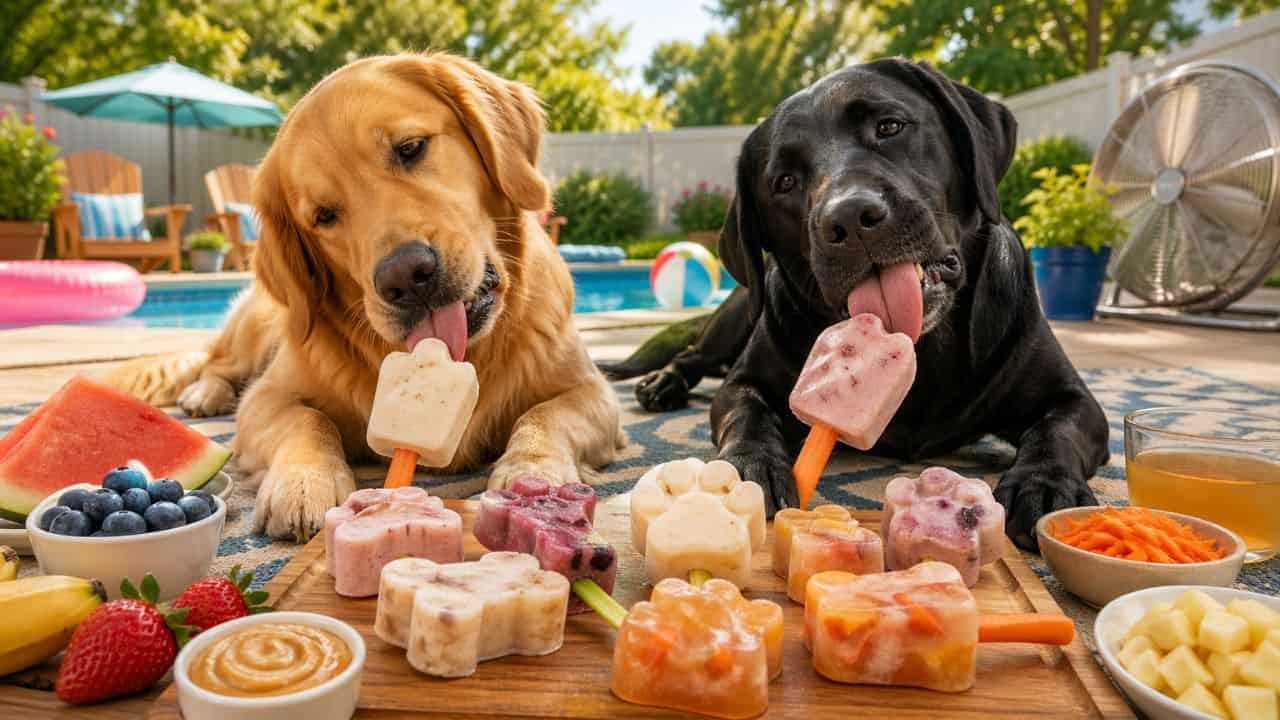
Sound familiar?
Here is the good news: you do not need a store-bought mix, a fancy kit, or a trip to the pet store to fix this. A homemade woof pupsicle — a frozen dog treat made entirely from real, whole ingredients — takes about 10 minutes of hands-on time, uses things you already have in your kitchen, and will have your dog doing happy zoomies when they see you pull it out of the freezer.
This guide walks you through everything: the base recipe, flavor add-ins, safe ingredients, what to avoid, how to store them, and how often to serve them. No box mix. No preservatives. Just a happy, cool dog.
What Is a Woof Pupsicle, Anyway?
A woof pupsicle is simply a frozen treat made specifically for dogs. Think of it as a dog-friendly popsicle — made with ingredients that are safe, nutritious, and actually enjoyable for your pup. Unlike human popsicles that are loaded with added sugar, artificial sweeteners, and dairy, a pupsicle is built around whole foods that support your dog’s hydration, digestion, and overall health.
The term “woof pupsicle” has picked up popularity among US dog owners, especially during summer months, as a fun way to describe these DIY frozen dog treats. Whether you call it a dog popsicle, a frozen pup treat, or a pupsicle, the result is the same: one very happy dog.
Why Make a Homemade Pupsicle Instead of Buying One?
Most dog owners in the US have three solid reasons for making pupsicles from scratch.
You know exactly what is in it. Store-bought frozen dog treats often contain preservatives, fillers, and mystery “natural flavors.” When you make it at home, the ingredient list is as short and clean as you want it to be.
It is much cheaper. A bag of premade pupsicle mix or a box of frozen dog treats can run anywhere from $8 to $20. A batch of 8 to 12 homemade pupsicles costs less than $3 using pantry staples.
Your dog actually loves it more. Fresh ingredients smell better, taste better, and freeze more cleanly. Dogs have a nose that is 10,000 to 100,000 times more sensitive than ours. They can absolutely taste the difference.
Equipment You Will Need
Before you start mixing, gather these basic tools:
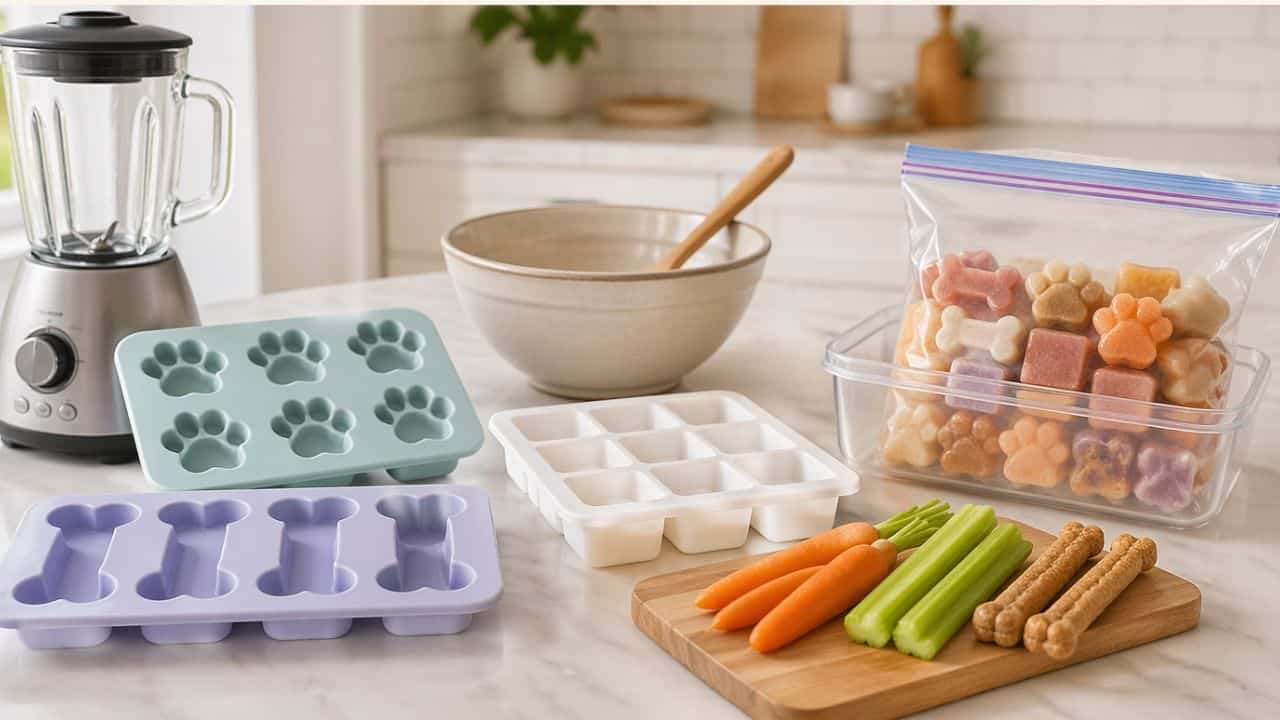
- Silicone molds or ice cube trays (paw print, bone-shaped, or standard cube shapes all work great)
- Blender or food processor (for smooth pupsicles)
- Mixing bowl and spoon (for chunkier, no-blend versions)
- Airtight freezer bag or container (for storage)
- Edible “sticks” such as baby carrots, celery sticks, or long thin dog biscuits (optional but adorable)
Pro Tip: Never use traditional wooden or plastic popsicle sticks for dog treats. They can splinter and become a choking hazard. Stick to edible options like carrots or skip the stick entirely and serve it in your dog’s bowl.
The Base Homemade Woof Pupsicle Recipe (From Scratch, No Mix)
This is the foundation recipe — simple, wholesome, and completely customizable. It uses three ingredients you probably already have.
Ingredients
| Ingredient | Amount | Why It Works |
| Ripe banana (mashed) | 2 medium | Natural sweetness, fiber, potassium |
| Plain unsweetened Greek yogurt (non-fat) | 1 cup | Creaminess, probiotics, gentle on digestion |
| Unsalted, xylitol-free peanut butter | 2 tablespoons | Protein, healthy fats, irresistible flavor |
| Water (optional, for consistency) | 2 to 3 tablespoons | Helps thin the mixture for easier pouring |
Yield: 8 to 10 standard-size pupsicles Prep time: 10 minutes Freeze time: 4 to 6 hours (or overnight)
Step-by-Step Instructions
Step 1: Check your peanut butter label. Before you do anything else, flip your peanut butter jar around and read the ingredients. Look for the word “xylitol” or “birch sugar.” If you see it, do not use that jar. Xylitol is highly toxic to dogs. Use a plain, unsalted peanut butter with nothing but peanuts on the label.
Step 2: Mash the bananas. Peel your bananas and mash them thoroughly in a mixing bowl using a fork. Riper bananas work best because they blend smoothly and have a naturally sweeter flavor without added sugar.
Step 3: Combine everything. Add the Greek yogurt and peanut butter to the mashed banana. Stir well until the mixture is smooth and uniform. If it feels too thick to pour, add 2 to 3 tablespoons of water and stir again.
Step 4: Pour into molds. Spoon or pour the mixture into your silicone molds or ice cube trays. Fill each cavity about three-quarters full to allow room for expansion during freezing.
Step 5: Insert edible sticks (optional). If you want to add a stick, push a baby carrot or a thin dog biscuit into the center of each mold so it stands upright. The mixture should be thick enough to hold it in place.
Step 6: Freeze. Place the molds on a flat surface in your freezer (a cutting board works great to keep them level). Freeze for at least 4 to 6 hours. For best results, freeze overnight.
Step 7: Pop and serve. Remove the molds from the freezer and gently push the pupsicles out. If they are sticking, run the bottom of the mold under warm water for 10 seconds. Serve immediately in your dog’s bowl or hold the stick while they enjoy it.
5 Flavor Variations to Try Next
Once you have nailed the base recipe, these variations are a natural next step. Each one uses ingredients most US households already keep on hand.
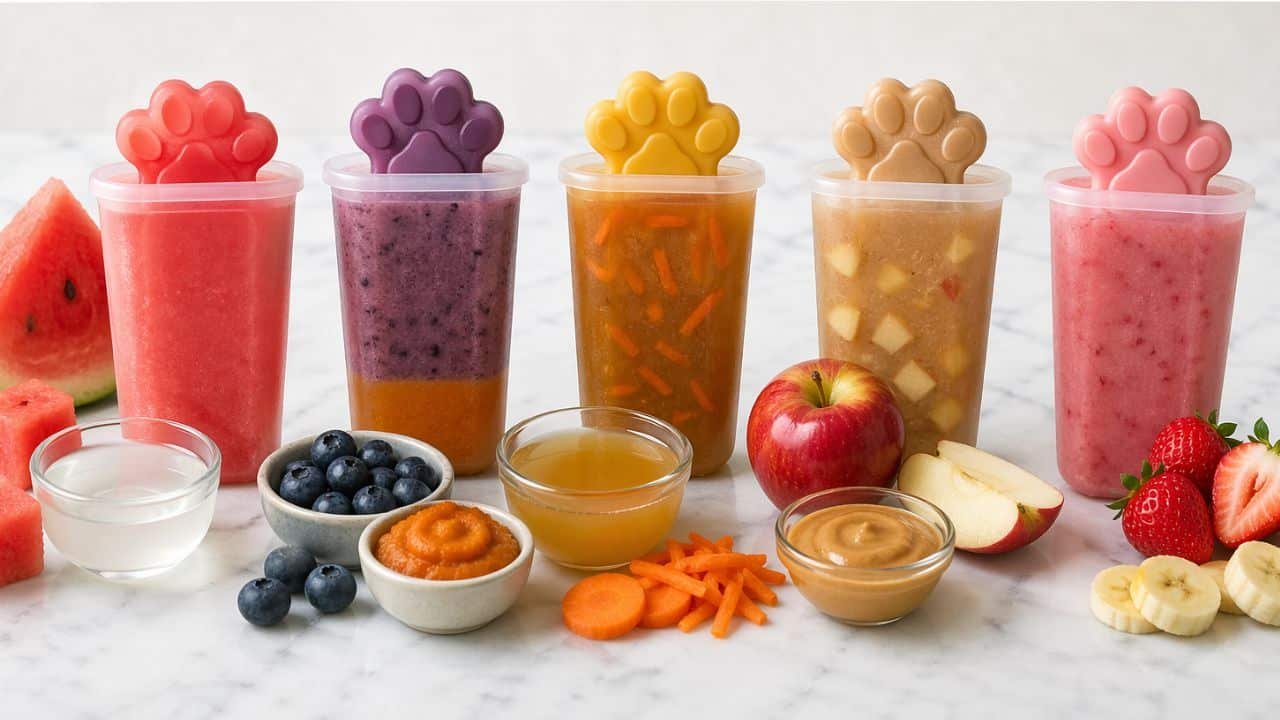
1. Watermelon and Coconut Water Pupsicle
Blend 2 cups of seedless watermelon chunks with half a cup of coconut water. Pour into molds and freeze. This is one of the most hydrating options you can make, ideal for hot summer days.
2. Blueberry and Pumpkin Pupsicle
Combine half a cup of fresh or frozen blueberries with a quarter cup of plain canned pumpkin puree (not pumpkin pie filling) and half a cup of plain yogurt. Blend until smooth, pour, and freeze. The pumpkin adds fiber, which supports digestion.
3. Bone Broth and Carrot Pupsicle (Savory)
Pour 2 cups of low-sodium, dog-safe bone broth into molds. Press small pieces of shredded carrot into each cavity before freezing. This is perfect for dogs who prefer savory treats over sweet ones. Be sure to use bone broth with no onion, no garlic, and no added salt.
4. Apple and Peanut Butter Pupsicle
Core and finely chop one apple (remove all seeds, as apple seeds contain trace amounts of cyanide). Mix with 2 tablespoons of xylitol-free peanut butter and a splash of water. Pour into molds and freeze. The apple chunks add texture and a pop of Vitamin C.
5. Strawberry and Banana Pupsicle
Blend 1 cup of fresh strawberries (hulled) with 1 ripe banana and a quarter cup of water. Pour into molds and freeze. This one has a beautiful pink color and a bright, fruity flavor dogs go wild for.
Dog-Safe Ingredients for Pupsicles
Not sure what else you can add? Here is a quick reference list of ingredients that are safe for most healthy adult dogs.
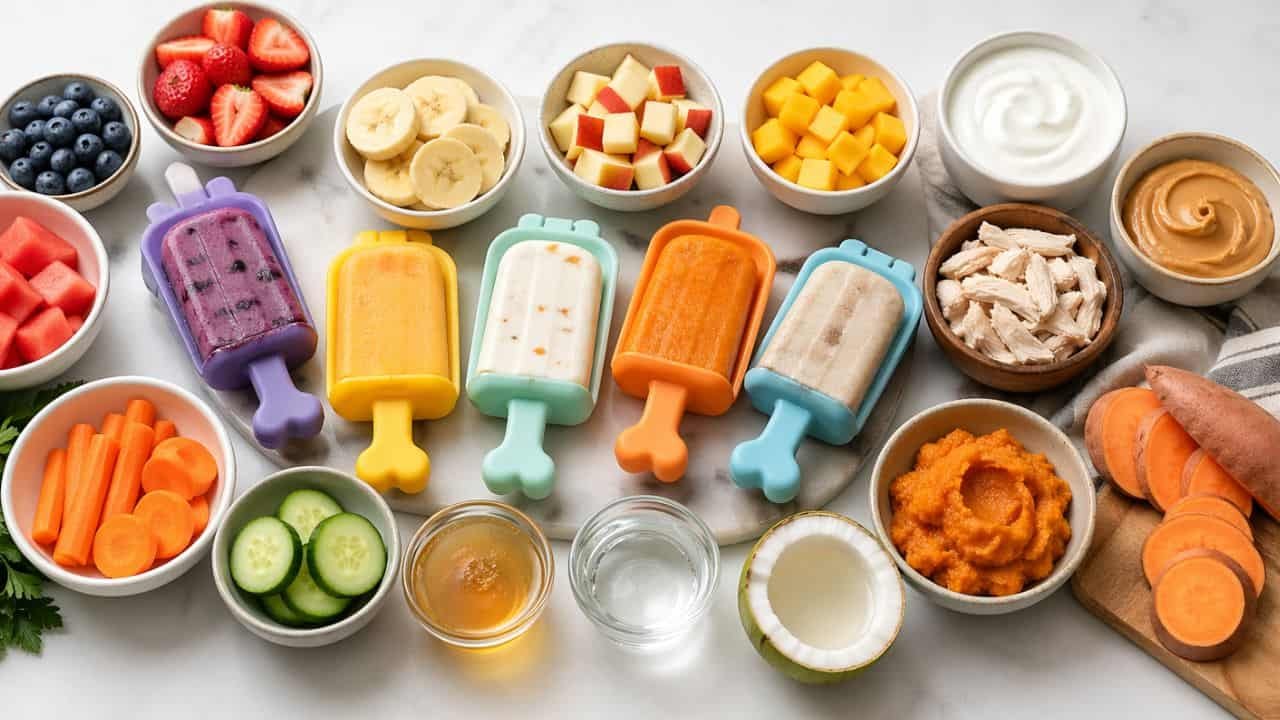
Safe Fruits:
- Banana
- Blueberries
- Strawberries
- Watermelon (seedless, rind removed)
- Apple (no seeds, no core)
- Mango (no pit or skin)
Safe Vegetables:
- Carrots (raw or lightly steamed)
- Cucumber
- Sweet potato (cooked, plain)
- Pumpkin (plain, canned or fresh, not pie filling)
Safe Liquids:
- Low-sodium, dog-safe bone broth (no onion, no garlic, no salt)
- Coconut water (unsweetened)
- Plain water
- Low-sodium chicken broth (no seasonings)
Safe Proteins and Dairy:
- Plain, unsweetened Greek yogurt (non-fat or low-fat)
- Xylitol-free peanut butter
- Plain, cooked chicken (shredded, unseasoned)
Ingredients You Must Never Use in Homemade Dog Pupsicles
This section is non-negotiable. These ingredients are toxic or harmful to dogs, and they show up in some places you might not expect.
| Ingredient | Why It Is Dangerous |
| Xylitol (birch sugar) | Extremely toxic, can cause seizures, liver failure, and death |
| Grapes and raisins | Cause acute kidney failure even in small amounts |
| Chocolate (any form) | Contains theobromine, toxic to dogs |
| Onions and garlic | Destroy red blood cells, cause anemia |
| Avocado | Contains persin, which is toxic to dogs |
| Stone fruit pits (peach, cherry, apricot) | Contain cyanide compounds |
| Artificial sweeteners (aspartame, sucralose) | Can cause digestive upset and other health issues |
| Added salt | Excessive sodium is harmful to dogs |
| Macadamia nuts | Toxic to dogs, causes weakness and tremors |
| Nutmeg | Even small amounts can be toxic |
Important Note: Always read labels on peanut butter, yogurt, and bone broth. Xylitol can hide under the name “birch sugar” and is found in many products marketed as “natural” or “sugar-free.”
How to Store Homemade Pupsicles
Once your pupsicles are frozen solid, here is how to keep them fresh:

- Pop the pupsicles out of their molds.
- Place them in a single layer on a small baking sheet lined with parchment paper.
- Return to the freezer for 30 minutes to firm up fully (this is called a “flash freeze” and prevents them from sticking together).
- Transfer them to a zip-lock freezer bag or airtight container.
- Label the bag with the date.
Shelf life: Homemade pupsicles keep well in the freezer for up to 2 to 3 months. For the best flavor and texture, try to use them within one month.
How Often Can You Give Your Dog a Pupsicle?
Pupsicles are a treat, not a meal replacement. A general rule that most vets follow is the 10% rule: treats of all kinds should make up no more than 10% of your dog’s total daily calorie intake.
For most medium-sized dogs, one pupsicle per day during hot weather is perfectly reasonable. For smaller dogs, consider making mini-sized pupsicles using ice cube trays so the portion stays appropriate.
If your dog has a sensitive stomach, lactose intolerance, diabetes, pancreatitis, or is currently on a special diet, talk to your vet before introducing any new treats including pupsicles.
Tips for Serving Pupsicles Safely
- Always supervise your dog while they eat a pupsicle. Never let them wander off with a half-melted one, as it can drip and stain carpets or rugs.
- Serve larger pupsicles in a bowl to contain the mess. Smaller dogs in particular benefit from having the treat placed in a shallow bowl rather than handed to them directly.
- Let very large frozen pupsicles sit on the counter for 2 to 3 minutes before serving if your dog tends to chomp aggressively. This softens the surface slightly and reduces the risk of tooth strain.
- Keep an eye out for any signs of digestive upset the first time you introduce a new ingredient. Every dog is different, and some may have sensitivities to dairy or specific fruits.
Frequently Asked Questions
Can I make pupsicles without yogurt? Yes, absolutely. If your dog is lactose intolerant or you simply want to skip dairy, swap the yogurt for coconut milk (unsweetened), plain canned pumpkin, mashed banana, or just bone broth. The texture will be slightly less creamy but equally delicious.
Can puppies have homemade pupsicles? Puppies can enjoy pupsicles in very small amounts, but their digestive systems are more sensitive than adult dogs. Stick to simple two-ingredient recipes like blended watermelon frozen in an ice cube tray, and avoid peanut butter or yogurt until they are a few months older. Always check with your vet first.
My dog does not seem interested in frozen treats. What should I do? Some dogs, especially older ones or those who grew up in colder climates, are not immediately drawn to frozen food. Try letting the pupsicle thaw for 5 to 10 minutes before offering it. You can also try rubbing a tiny bit of peanut butter on the outside to get their interest going.
Do I need special molds, or can I use an ice cube tray? A standard ice cube tray works perfectly. Silicone molds in fun shapes like paws or bones are great for photos and presentation, but they are not required. The recipe works exactly the same in any container that can go in the freezer.
Can I add protein powder or supplements to a pupsicle? Only if the specific product is formulated for dogs and cleared by your vet. Human protein powders often contain sweeteners, artificial flavors, or other additives that are harmful to dogs. Stick to whole food ingredients whenever possible.
Are pupsicles good for dogs year-round, or just in summer? While pupsicles are most popular during summer, dogs can enjoy frozen treats year-round. Cold temperatures provide mental stimulation and make the treat last longer, which helps with boredom and anxiety on lazy indoor days. Just let the pupsicle sit out for a minute or two on really cold days if your dog seems sensitive to extreme cold.
How long will it take for the pupsicles to freeze solid? Minimum 4 hours, but overnight is strongly recommended for recipes that include coconut water or bone broth. Thicker mixtures with yogurt and banana tend to freeze faster than liquid-based recipes.